


Artificial intelligence has become one of the biggest competitive advantages for small businesses in America. Tasks that once required an entire department — customer support, bookkeeping, marketing campaigns, payroll — can now be handled in minutes with the right AI-powered software. Whether you’re running a boutique in Nashville, a consulting firm in Denver, or a Shopify store from your living room in Atlanta, AI tools are leveling the playing field between small businesses and Fortune 500 companies.
In this guide, you’ll discover the best AI tools for business in 2026, compare features and pricing across categories, and learn exactly which software fits your team size, budget, and growth goals.
Table of Contents
- Why Small Businesses Need AI
- Benefits of Using AI Tools
- Best AI Tools for Business
- Best AI CRM Software
- AI Accounting Software
- AI Customer Support Software
- AI Marketing Automation
- Best Payroll Software for Small Business
- HubSpot vs Salesforce
- How to Choose the Right AI Tool
- Frequently Asked Questions
- Final Thoughts
Why Small Businesses Need AI
For decades, enterprise-level companies held a massive advantage: they could afford large teams, expensive software, and dedicated analysts. In 2026, that gap has all but disappeared — and AI is the reason why.
Small business owners are now using AI to automate repetitive tasks like answering customer emails, generating invoices, scheduling social media posts, and tracking expenses. What used to take a full-time employee can now run on autopilot for a fraction of the cost.
Beyond efficiency, AI gives small businesses something even more valuable: data-driven decision making. Platforms with built-in AI can predict customer churn, flag cash flow risks before they become crises, and recommend the best time to launch a marketing campaign — all without hiring a data scientist.
The businesses that thrive in 2026 won’t necessarily be the biggest. They’ll be the ones that work the smartest — and AI is the smartest investment most small business owners can make right now.
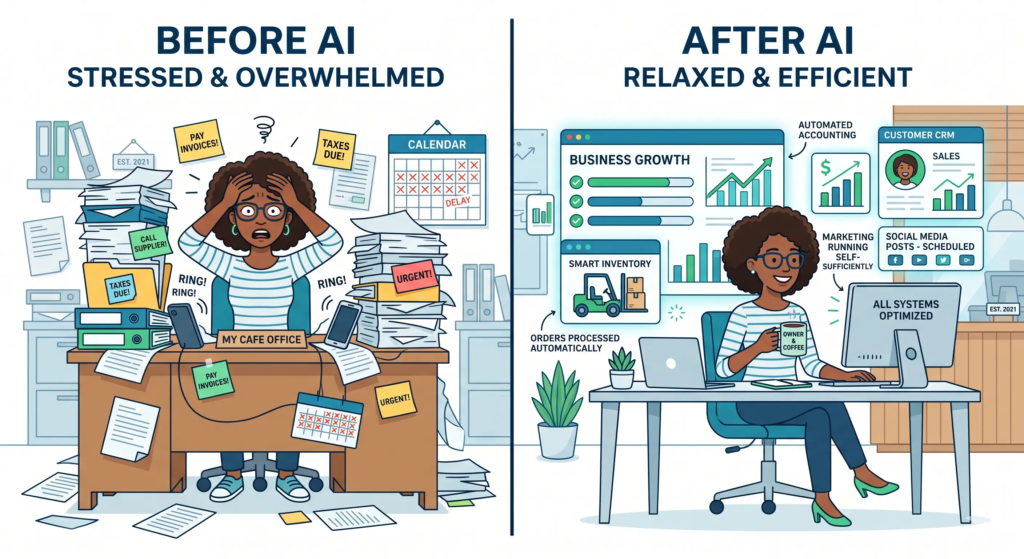
Benefits of Using AI Tools
Save Time
AI automates the tasks that eat your day — answering FAQs, sorting emails, generating reports, scheduling appointments. Business owners using AI tools report saving 10–20 hours per week on average.
Reduce Business Costs
Replacing or supplementing manual labor with AI software dramatically reduces overhead. A single AI chatbot can handle thousands of customer inquiries simultaneously at a cost far lower than a full support team.
Better Customer Experience
AI-powered tools personalize every customer touchpoint — from product recommendations to support ticket responses — making customers feel heard and valued without requiring constant human attention.
Improve Sales
AI CRM tools analyze buyer behavior, score leads automatically, and alert your sales team to the hottest opportunities at exactly the right moment. The result: shorter sales cycles and higher close rates.
Automate Marketing
From email sequences to social content calendars, AI marketing tools handle campaign creation, A/B testing, and performance optimization — so your marketing runs 24/7, even when you’re not at your desk.
Smarter Decision Making
AI platforms turn raw data into actionable insights. Instead of guessing what products to stock or which customers to target, AI tells you exactly where to focus based on real patterns in your business data.
Best AI Tools for Business
1. ChatGPT (OpenAI)
Best For: Content creation, customer communication drafts, internal knowledge management
Key Features: Advanced natural language generation, custom GPTs for business workflows, API integration, file and image analysis, real-time web browsing (GPT-4o)
Pros: Incredibly versatile; handles writing, research, coding, and analysis; huge third-party integration ecosystem
Cons: Requires good prompting skills to get best results; no native CRM or accounting integration
Pricing: Free tier available; ChatGPT Plus at $20/month; Team plan at $30/user/month
Ideal Business Size: Solo to mid-size (1–200 employees)
2. Microsoft Copilot
Best For: Businesses already using Microsoft 365 (Word, Excel, Teams, Outlook)
Key Features: AI writing in Word, formula suggestions in Excel, meeting summaries in Teams, email drafting in Outlook
Pros: Deeply embedded in tools most US businesses already use; enterprise-grade security; no learning curve if your team uses Office
Cons: Requires Microsoft 365 subscription; not ideal for non-Microsoft tech stacks
Pricing: Microsoft 365 Copilot starts at $30/user/month
Ideal Business Size: Small to large (5–500+ employees)
3. Google Gemini
Best For: Businesses in the Google Workspace ecosystem (Gmail, Docs, Sheets, Meet)
Key Features: AI writing in Docs, smart replies in Gmail, data analysis in Sheets, meeting notes in Meet
Pros: Native Google integration; strong for research and summarization; excellent mobile experience
Cons: Still maturing compared to Copilot; some features require Workspace Business plans
Pricing: Gemini Advanced at $19.99/month; included in select Google Workspace Business plans
Ideal Business Size: Solo to mid-size (1–100 employees)
4. HubSpot AI
Best For: Marketing, sales, and CRM automation for growing small businesses
Key Features: AI content writer, predictive lead scoring, email optimization, chatbot builder, campaign analytics
Pros: All-in-one platform; generous free CRM tier; excellent onboarding resources
Cons: Advanced features get expensive fast; can feel overwhelming for very small teams
Pricing: Free CRM; Starter at $20/month; Professional at $890/month
Ideal Business Size: Small to mid-market (5–500 employees)
5. Salesforce Einstein
Best For: Established businesses wanting enterprise-grade AI CRM
Key Features: Predictive AI scoring, AI-generated email content, automated workflows, natural language search, revenue intelligence
Pros: Most powerful CRM AI on the market; deep customization; massive integration library
Cons: Expensive; steep learning curve; overkill for very small teams
Pricing: Starts at $25/user/month; Einstein AI add-ons from $50/user/month
Ideal Business Size: Mid-market to enterprise (50–1,000+ employees)
6. Notion AI
Best For: Internal documentation, project management, and knowledge bases
Key Features: AI writing and summarization within pages, auto-fill databases, meeting note generation, Q&A across your entire workspace
Pros: Clean interface; excellent for remote teams; combines notes, wikis, and project management in one place
Cons: Not a CRM or accounting tool; limited external integrations compared to dedicated platforms
Pricing: Notion AI add-on at $10/user/month; base plans from $8/user/month
Ideal Business Size: Solo to mid-size (1–200 employees)
7. Grammarly Business
Best For: Any business where written communication matters (which is all of them)
Key Features: Real-time grammar and tone correction, brand voice consistency, plagiarism detection, generative AI writing suggestions
Pros: Works across email, docs, Slack, social — anywhere you type; instant ROI for client-facing teams
Cons: Primarily a writing tool, not a workflow automation platform
Pricing: Free basic plan; Premium at $12/month; Business at $15/user/month
Ideal Business Size: All sizes
8. Zapier AI
Best For: Automating workflows between apps without coding
Key Features: AI-powered Zap builder, natural language automation creation, multi-step workflow automation across 6,000+ apps
Pros: No coding required; connects virtually every business tool you already use; massive time saver
Cons: Complex automations can get expensive; occasional sync delays with some third-party apps
Pricing: Free tier (100 tasks/month); Starter at $19.99/month; Professional at $49/month
Ideal Business Size: Solo to mid-size (1–200 employees)
Best AI CRM Software
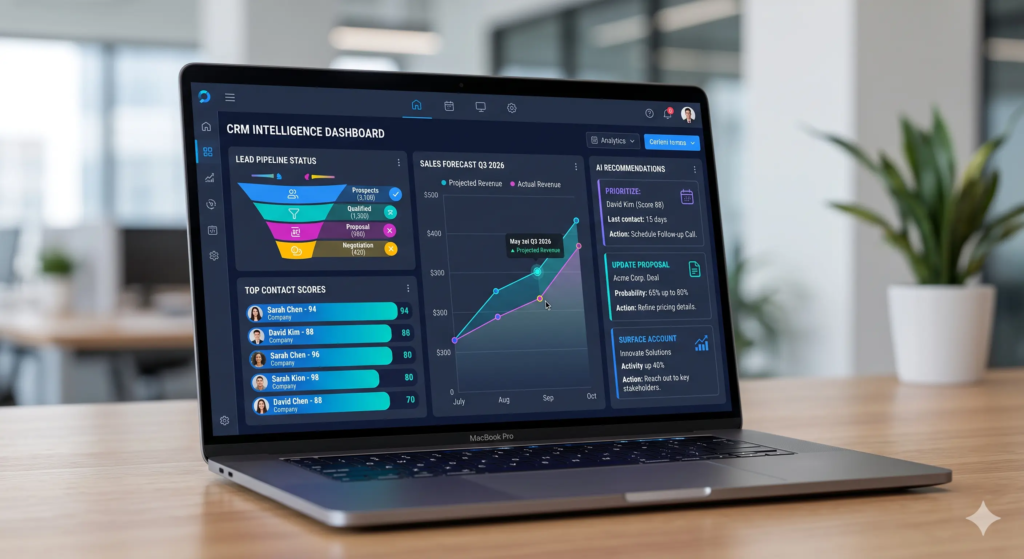
Customer Relationship Management software is where AI delivers some of its most dramatic results for small businesses. The right AI CRM software doesn’t just store contacts — it predicts who will buy, flags at-risk customers, and automates your entire follow-up sequence.
| Feature | HubSpot CRM | Salesforce Einstein | Zoho CRM AI | Freshsales AI |
|---|---|---|---|---|
| Starting Price | Free / $20/mo | $25/user/mo | $14/user/mo | $9/user/mo |
| AI Lead Scoring | ✅ Yes | ✅ Yes | ✅ Yes | ✅ Yes |
| Email Automation | ✅ Yes | ✅ Yes | ✅ Yes | ✅ Yes |
| AI Forecasting | ✅ Yes | ✅ Yes | ✅ Yes | ⚠️ Limited |
| Free Tier | ✅ Yes | ❌ No | ✅ Yes | ✅ Yes |
| Ease of Use | ⭐⭐⭐⭐⭐ | ⭐⭐⭐ | ⭐⭐⭐⭐ | ⭐⭐⭐⭐ |
| Best For | SMBs | Enterprise | Budget-conscious | Sales teams |
HubSpot CRM is the top pick for most US small businesses — the free tier is genuinely powerful, and the AI features scale with you as revenue grows. Zoho CRM AI is the best value play if you’re watching every dollar. Salesforce Einstein is the heavyweight champion but commands a premium price that only makes sense once your team reaches 20+ sales reps.
AI Accounting Software
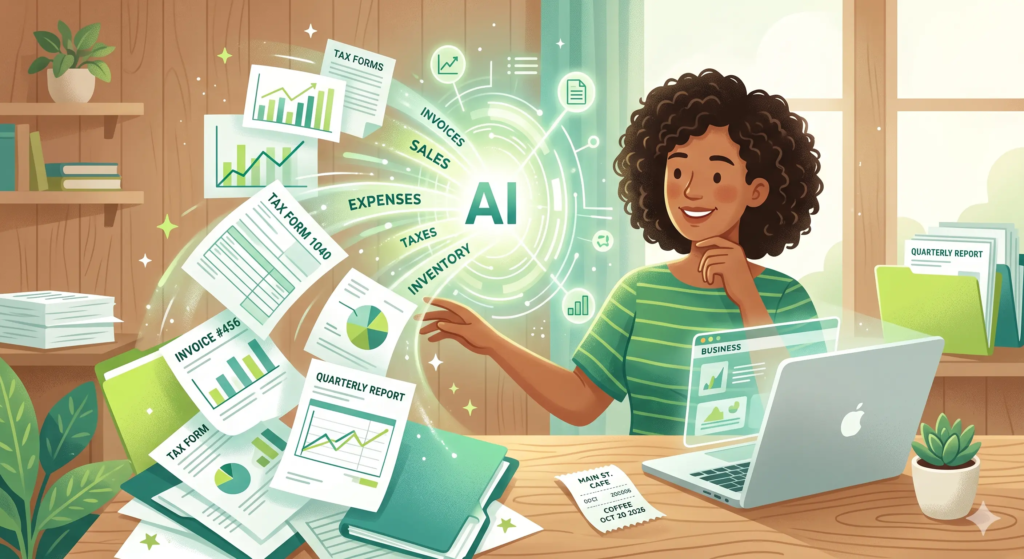
Smart accounting is no longer about hiring a bookkeeper to enter receipts. AI accounting software automatically categorizes transactions, flags anomalies, generates profit-and-loss reports, and even predicts cash flow gaps before they hit.
QuickBooks Online
The most widely used small business accounting software in America. QuickBooks’ AI features include automatic expense categorization, smart invoice matching, and cash flow forecasting. Mileage tracking via mobile is a standout for service businesses. Pricing: Simple Start at $30/month; Plus at $85/month.
Xero
A strong QuickBooks alternative with a cleaner interface and better multi-currency support — ideal for US businesses with international clients. AI-powered bank reconciliation saves hours of manual work monthly. Pricing: Starter at $29/month; Standard at $46/month.
FreshBooks
Purpose-built for freelancers and service-based businesses. FreshBooks AI streamlines invoicing, time tracking, and client billing. The automatic late payment reminders alone have helped thousands of US small businesses improve cash flow. Pricing: Lite at $19/month; Plus at $33/month.
Zoho Books
The most affordable full-featured AI accounting option, particularly powerful if you’re already using Zoho’s CRM or HR tools. Includes automated workflows, client portal, and GST/tax compliance tools. Pricing: Free for businesses under $50K/year revenue; Standard at $20/month.
AI Customer Support Software
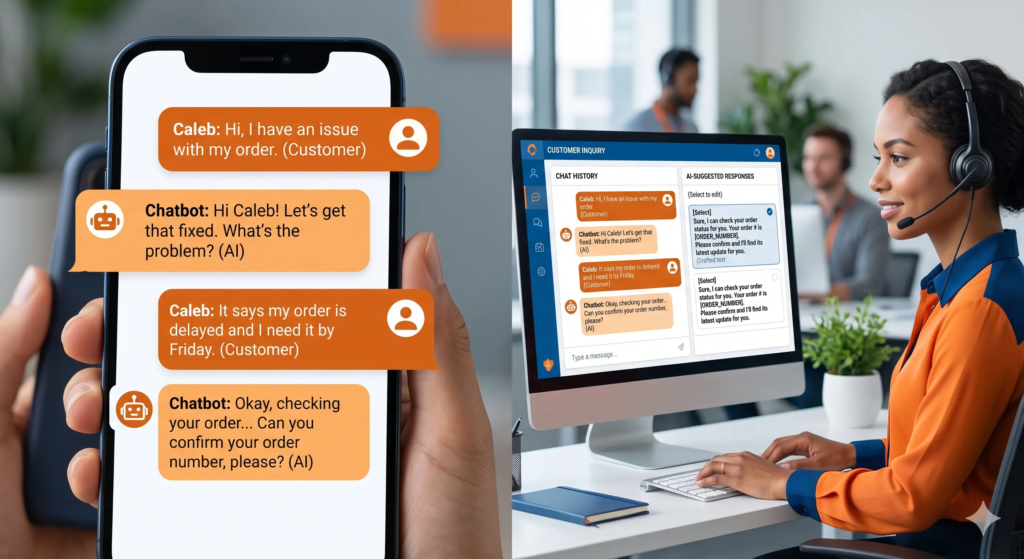
In 2026, customers expect answers instantly — at 2 AM on a Saturday if needed. AI customer support software makes 24/7 coverage possible for small teams without hiring overnight staff.
Zendesk AI
The enterprise standard for customer support. Zendesk’s AI suggests responses, routes tickets automatically, and summarizes long conversation threads for agents. Best for businesses handling high ticket volumes. Pricing: Suite Team at $55/agent/month.
Intercom
Intercom’s AI agent (Fin) resolves a significant percentage of customer questions without human involvement. It’s particularly strong for SaaS companies and digital product businesses. Pricing: Essential at $39/seat/month.
Freshdesk AI
A cost-effective Zendesk alternative with strong AI ticketing, Freddy AI bot, and automated resolution suggestions. Excellent free tier for very small teams. Pricing: Free for up to 10 agents; Growth at $15/agent/month.
Tidio AI Chatbot
The best option for e-commerce and small retail businesses. Tidio’s Lyro AI chatbot handles customer FAQs, order tracking questions, and product recommendations automatically. Installs on Shopify, WordPress, and Wix in minutes. Pricing: Free tier available; Tidio+ from $29/month.
AI Marketing Automation
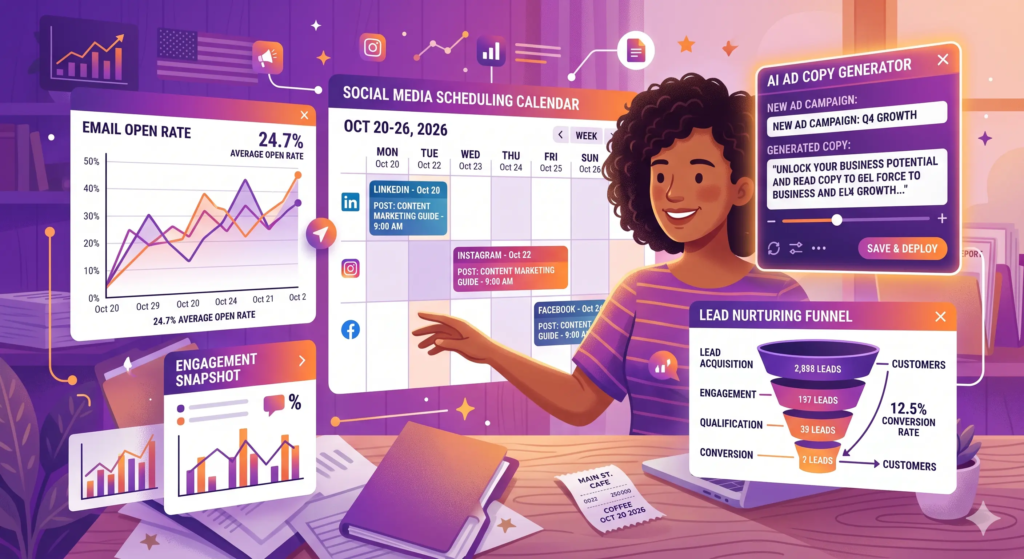
Marketing is where AI delivers the fastest ROI for most small businesses. The right AI marketing automation platform can replace the work of a full-time marketing coordinator — handling email sequences, content creation, lead nurturing, and campaign analysis around the clock.
HubSpot Marketing Hub
The gold standard for all-in-one inbound marketing. AI features include email send-time optimization, content suggestions, smart CTAs, and predictive lead scoring. Best for businesses wanting marketing and CRM in one unified platform. Pricing: Starter at $20/month; Professional at $890/month.
ActiveCampaign
The best pure-play email and marketing automation tool for small businesses. ActiveCampaign’s AI predicts optimal send times, automates complex customer journeys, and integrates with 900+ apps. Excellent deliverability rates. Pricing: Lite at $29/month; Plus at $49/month.
Mailchimp AI
Still the most recognizable name in email marketing and a strong option for businesses just getting started with automation. AI-generated subject line suggestions and send-time optimization are included even at lower tiers. Pricing: Free up to 500 contacts; Essentials at $13/month.
Brevo (formerly Sendinblue)
A budget-friendly alternative with strong SMS + email automation, an AI subject line generator, and a visual workflow builder. Pricing based on email volume rather than contact count makes it cost-effective for large lists. Pricing: Free tier (300 emails/day); Starter at $25/month.
Jasper AI
Not a traditional marketing platform — Jasper is a dedicated AI content writer that creates blog posts, ad copy, social captions, and email campaigns from simple prompts. Works alongside your existing marketing stack. Pricing: Creator at $49/month; Teams at $125/month.
Best Payroll Software for Small Business
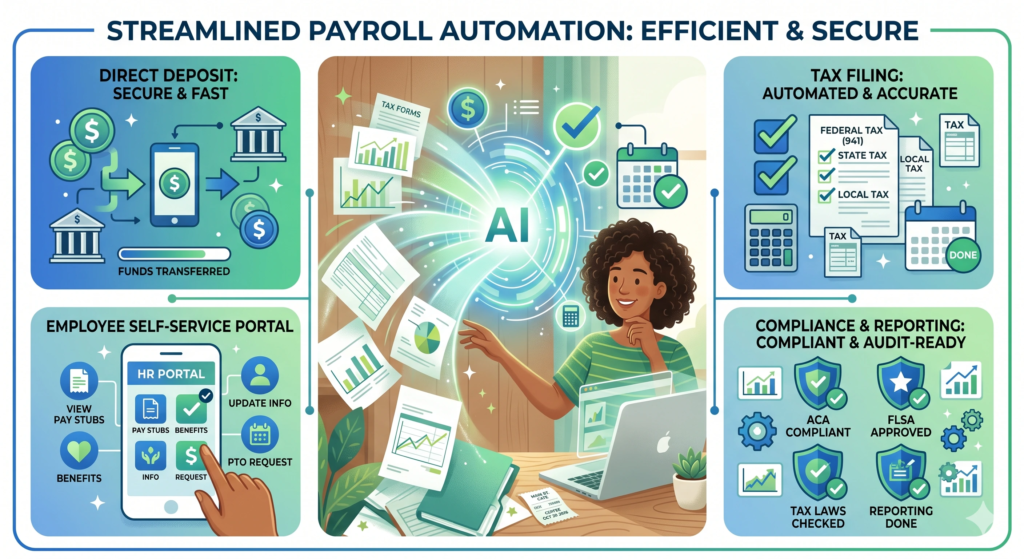
Getting payroll wrong is one of the fastest ways to destroy employee trust — and attract IRS attention. The best payroll software for small business owners in 2026 handles calculations, tax filings, and compliance automatically so you never miss a deadline.
Gusto
The runaway favorite for small US businesses. Gusto automates federal and state payroll tax filing, offers employee self-service benefits enrollment, and provides next-day direct deposit. The interface is genuinely user-friendly — you don’t need an HR background to use it confidently. Pricing: Simple at $40/month + $6/employee; Plus at $80/month + $12/employee.
ADP Run
The most trusted name in American payroll, ideal for businesses planning to scale. ADP handles multi-state payroll, HR compliance, workers’ comp, and benefits administration. Deep reporting capabilities. Pricing: Custom quotes; typically $79–$150/month + per-employee fees.
Rippling
The most powerful option if you want payroll, HR, IT, and benefits in one platform. Rippling’s AI automates onboarding, payroll changes, and compliance updates simultaneously. Best for tech-forward businesses growing fast. Pricing: Core HR module starts at $8/user/month; payroll add-on required.
Paychex Flex
A strong mid-market option with excellent compliance support and 24/7 customer service — a critical differentiator when payroll issues hit on a Friday afternoon. Good HR analytics and time-tracking integrations. Pricing: Custom quotes; Essentials starts around $39/month + $5/employee.
HubSpot vs Salesforce
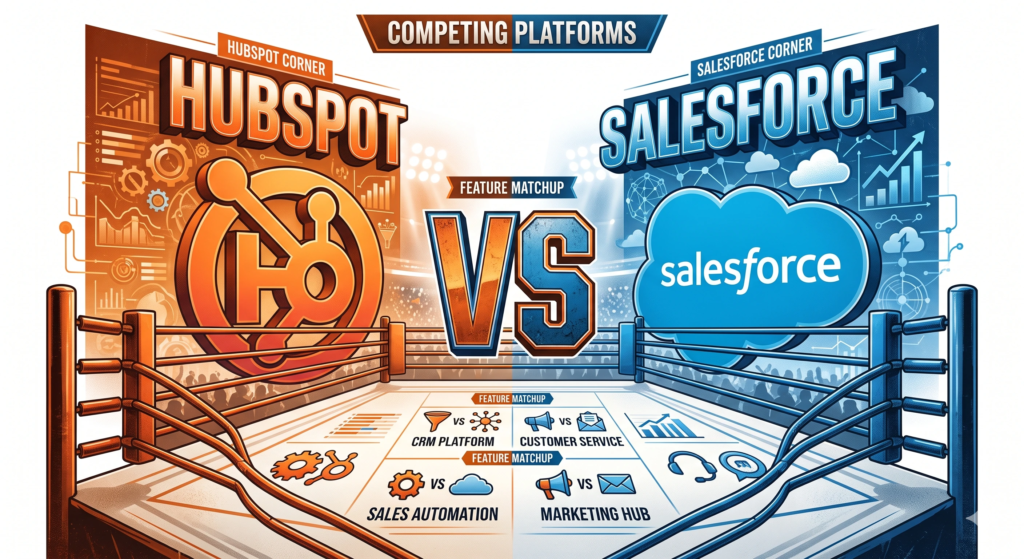
This is the debate that plays out in thousands of small business strategy sessions every year. Both platforms are excellent — but they serve different businesses at different stages.
| Category | HubSpot | Salesforce |
|---|---|---|
| Ease of Use | ⭐⭐⭐⭐⭐ Very beginner-friendly | ⭐⭐⭐ Steep learning curve |
| AI Features | Strong — content AI, forecasting, scoring | Industry-leading — Einstein AI is the most advanced |
| Automation | Excellent visual workflow builder | Extremely powerful; requires more setup |
| CRM Capabilities | Full-featured; great for SMBs | Best-in-class; built for complex sales orgs |
| Free Tier | ✅ Generous free CRM forever | ❌ No free tier |
| Starting Price | $20/month | $25/user/month |
| Scalability | Good to ~500 users | Unlimited — built for enterprise |
| Best For | Growing SMBs, inbound marketing teams | Established businesses, large sales teams |
| Customer Support | Strong knowledge base; chat support | Premium support costs extra |
| Integrations | 1,000+ native integrations | 3,000+ via AppExchange |
The verdict: If you’re a small business under 50 employees, start with HubSpot — the free tier alone gives you more than most competitors charge for. If you’re a rapidly scaling company with a dedicated sales team and complex pipeline management needs, Salesforce Einstein is worth the investment.
How to Choose the Right AI Tool
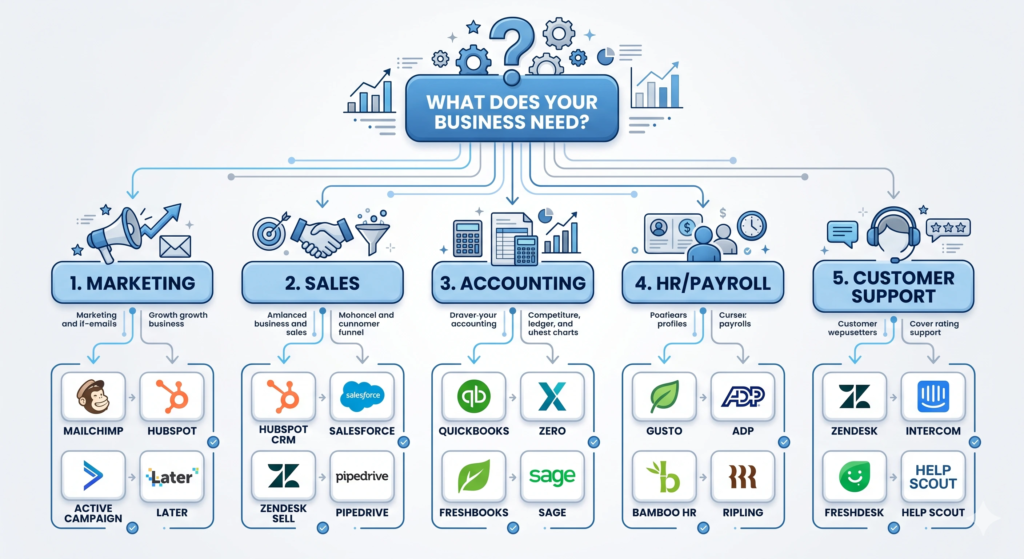
With hundreds of AI tools competing for your budget, the choice can feel paralyzing. Use these eight criteria to cut through the noise:
Budget: Be honest about what you can sustain monthly — not just what you can afford this month. Most platforms charge per user, so factor in team growth.
Team Size: A solo founder needs a different tool than a 30-person team. Platforms like Tidio and FreshBooks are optimized for very small operations; Salesforce and ADP scale to thousands of users.
Business Type: A service-based consultancy needs different AI than an e-commerce store. Match tools to your revenue model, not just general positive reviews.
Scalability: Choose platforms that grow with you. Switching CRMs or payroll providers mid-growth is painful and expensive — pick tools with enterprise tiers you can grow into.
Integrations: Your AI tools need to talk to each other. Before committing, verify that your shortlist connects with your existing stack — website platform, payment processor, email provider.
Security: For any tool handling customer data, payment information, or employee records, verify SOC 2 Type II compliance and read the data privacy policy carefully.
Ease of Use: The most powerful tool is worthless if your team won’t adopt it. Prioritize platforms with strong onboarding resources, video tutorials, and responsive support.
Customer Support: When payroll breaks or a campaign doesn’t send, you need real help fast. Check Trustpilot and G2 reviews specifically for support quality before signing any annual contract.
Frequently Asked Questions
What is the best AI tool for small businesses in 2026?
It depends on your primary need. For all-around versatility, ChatGPT and HubSpot AI lead the pack. For marketing automation, ActiveCampaign or HubSpot Marketing Hub. For accounting, QuickBooks remains the US standard.
Which AI CRM software is best for a small business?
HubSpot CRM is the best starting point — the free tier is genuinely powerful, and it scales as you grow. Zoho CRM AI is the best value for budget-conscious businesses.
Can AI actually automate accounting?
Yes — modern AI accounting tools like QuickBooks and Xero automatically categorize transactions, reconcile bank accounts, generate invoices, and flag discrepancies. You still need a human (or accountant) for strategy and tax filing review, but day-to-day bookkeeping is largely automatable.
What is the best payroll software for a small business?
Gusto is the top choice for most US small businesses under 100 employees — it’s intuitive, handles all federal and state tax filings automatically, and offers transparent pricing.
Is AI marketing worth it for a small business?
Absolutely. Even entry-level tools like Mailchimp AI can save 5–10 hours per week on campaign management while improving open rates and conversion through smart optimization.
Which AI chatbot is best for customer support?
Tidio is best for e-commerce and small retail. Intercom’s Fin AI is the strongest for SaaS and digital businesses. Freshdesk AI offers the best value for service businesses on a budget.
Is HubSpot better than Salesforce for a small business?
For most small businesses, yes — HubSpot is easier to implement, more affordable, and has a strong free tier. Salesforce becomes the better choice once you have a large, dedicated sales team with complex pipeline needs.
Are AI tools safe for my business data?
Reputable platforms — HubSpot, Salesforce, QuickBooks, Gusto — maintain enterprise-grade security with SOC 2 compliance, data encryption, and clear privacy policies. Always read the data processing agreement before inputting sensitive customer or employee information.
How long does it take to see ROI from AI tools?
Most small businesses report measurable time savings within the first 30 days. Revenue impact — through better lead conversion or reduced churn — typically shows within 60–90 days of consistent use.
Do I need technical skills to use AI business tools?
No. The best small business AI tools in 2026 are designed for non-technical users, with drag-and-drop builders, plain-language setup guides, and AI assistants that help you configure the software itself.
Final Thoughts
The AI revolution isn’t coming for small businesses — it’s already here, and the businesses that act now will hold a significant advantage over those that wait. The best AI tools for business in 2026 don’t require a tech team, a massive budget, or months of implementation. Many of the platforms reviewed in this guide offer free tiers or 14–30 day trials that let you test the value before spending a dollar.
Start simple: pick one category where your business loses the most time — whether that’s customer support, marketing emails, or bookkeeping — and deploy an AI tool there first. Master it, measure the impact, then expand. Within six months, you could be running a leaner, faster, more profitable business than you thought possible with your current team size.
The best investment most American small business owners can make in 2026 isn’t another employee — it’s the AI tools that make every employee you have dramatically more productive.
